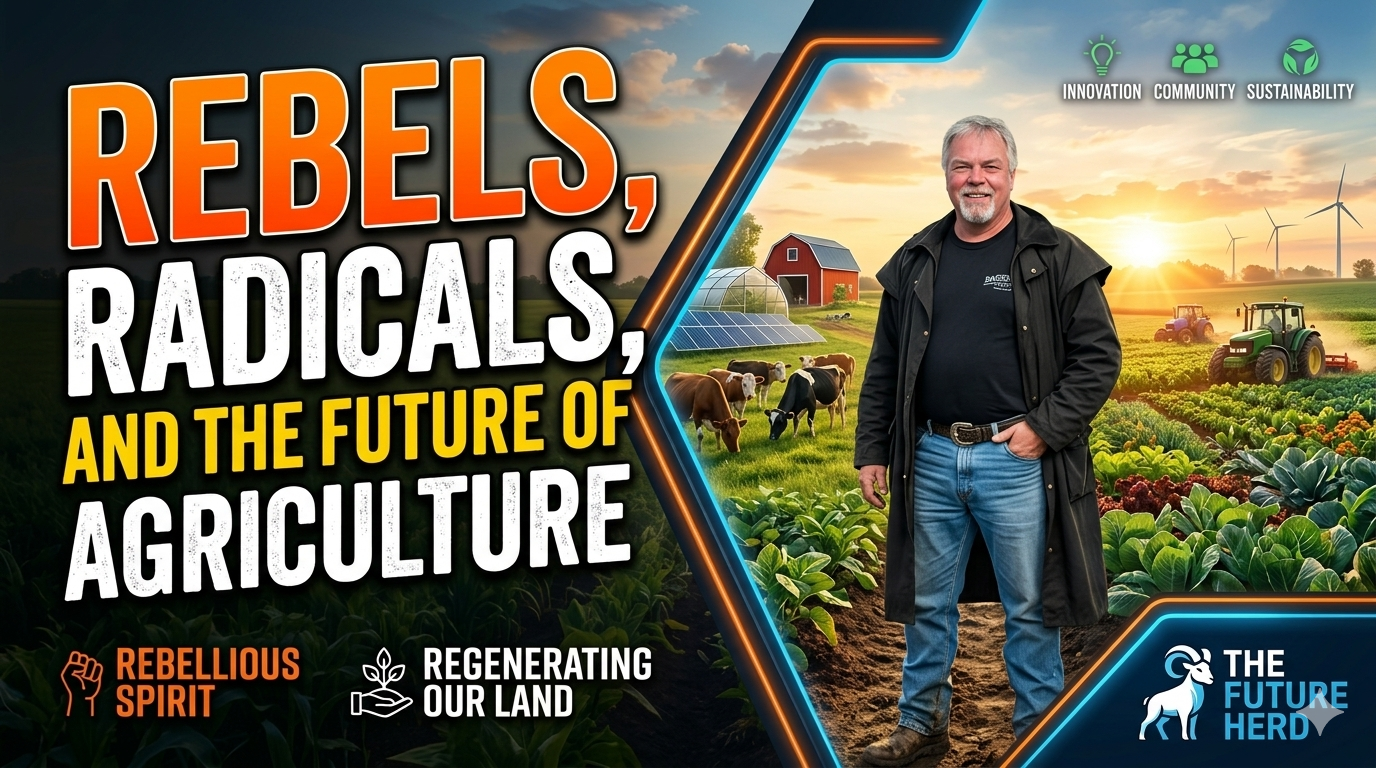
Episode 10: Rebels, Radicals, and the Future of Agriculture — A Conversation with Jamie Reaume
Episode 10 · March 17, 2026
Jesse Hirsh speaks with Jamie Reaume — nearly three decades inside Canada's agri-food sector — about why the sector's institutional conversations rarely change, what independent thinking costs, and why dissent is essential if agriculture is going to navigate the decades ahead.
Overview
Across Canada's agri-food sector, leadership often happens inside institutions — boards, associations, policy tables. But some of the most important voices are the ones willing to challenge those institutions and ask harder questions about the future.
Jamie Reaume has spent nearly three decades inside the conversations that shape Canadian agriculture. In this episode of Future Herd, he reflects on what that vantage point has taught him: why certain debates in the sector never seem to move forward, how institutional culture shapes decision-making, and why independent thinking remains essential if agriculture is going to navigate the decades ahead.
Early in the conversation Jamie describes himself plainly: a rebel, a radical, and a free thinker. That perspective drives a wide-ranging discussion about leadership, honesty inside the sector, and the tension between supporting agriculture and challenging the assumptions that hold it back.
Key themes
- Why dissent matters inside the agri-food sector
- The institutional habits that slow change in agriculture
- Leadership, independence, and the future of sector dialogue
- What it means to fight for a food system that is fair and resilient
Guests
Jamie Reaume is a veteran agricultural advocate and strategic leader with nearly three decades involved in Canada's agri-food sector. He is the former Executive Director and founder of the Holland Marsh Growers' Association, where he helped establish the Holland Marsh as a recognized brand and advocated for Ontario's produce sector at every level of government. He has collaborated with provincial and federal ministers on agriculture policy, co-authored research on integrated pest management, and built partnerships across the agricultural value chain.