Beyond Charity: The Evolving Logistics of Food Security in Toronto
When emergency response becomes permanent infrastructure, the boundaries between survival and systemic failure blur.
Published April 27, 2026
The line between emergency response and essential infrastructure has become increasingly blurred in Toronto's food security landscape. What began as a temporary charitable intervention has transformed into a sophisticated logistical network that reveals deep structural challenges in how we understand poverty, employment, and community survival.
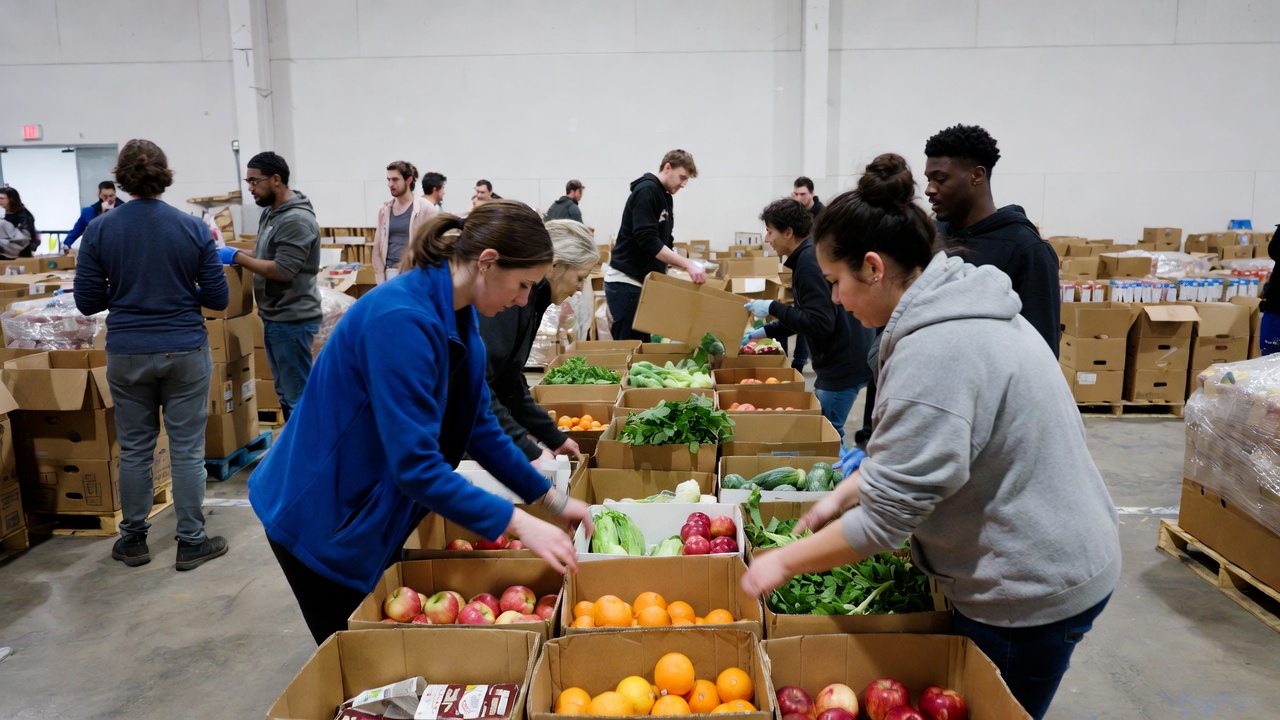
At the Daily Bread Food Bank, this transformation is not just philosophical but operational. From serving 60,000 families to now supporting 330,000, the organization has evolved from a stopgap measure to a critical support system that maps, forecasts, and anticipates community needs with technological precision. This shift represents more than scale—it signals a fundamental reimagining of how social support operates in one of North America's most affluent cities.
The data tells a stark story. In a city known for its economic dynamism, nearly 10% of Toronto's population now relies on food banks. This isn't just about hunger; it's about the intricate web of economic precarity that leaves even employed individuals struggling to maintain basic nutritional needs. A worker earning $50,000 annually can find themselves underwater after rent, with mere hundreds of dollars left for food, clothing, and transportation.
What makes this system remarkable is not just its efficiency, but its commitment to dignity. Daily Bread has consciously designed its operations to minimize the shame often associated with seeking food support. The organization understands that access is not just about calories, but about maintaining human dignity in challenging circumstances.
The infrastructure of food security now extends far beyond traditional models. With approximately 200 food programs across Toronto, these support systems have become as ubiquitous as public transit routes. This is both an achievement and an indictment—a testament to community resilience and a clear signal of systemic economic dysfunction.
Policy alternatives are emerging, driven by frontline insights. Advocacy for income supports like the Canada Disability Benefit, proposals for rental tax credits, and critiques of precarious employment models are becoming more sophisticated. These aren't just band-aid solutions but comprehensive approaches to restructuring economic safety nets.
The food bank has thus become more than a distribution center. It's a data hub, a policy incubator, and a critical lens through which we can examine the complex intersections of housing, employment, and nutrition. The very existence of such comprehensive food security infrastructure suggests that we are witnessing the emergence of a new urban social contract.
As climate change, technological disruption, and economic volatility reshape our cities, Toronto's food security model offers a glimpse into potential futures. It demonstrates how community resilience can be built not through charity, but through systematic, dignified, and data-driven support systems that recognize the fundamental human right to nutrition.
The question now is not whether such systems are necessary, but how they can be further evolved to address root causes rather than perpetually managing symptoms of economic inequality.
Related Episode
Themes
- Food Insecurity
- Urban Infrastructure
- Social Policy
- Community Resilience
- Economic Precarity