Dignity-Centered Food Security: Choice, Literacy, and Collaboration
How The Mustard Seed is reimagining food assistance through choice, education, and shared space
Published March 30, 2026
Food insecurity affects at least 10% of Victoria's population, yet the way we traditionally provide food assistance often fails to preserve the dignity of those it aims to serve. Treska Watson from The Mustard Seed Street Church is reimagining food security through choice-based models, food literacy education, collaborative spaces, and de-stigmatization efforts.
As Treska puts it: "Humans are pack animals. We need each other. Not only do we need food, but we need to be in community with one another in order to feel like we're part of something."
The Choice Model: Moving Beyond "Take What You Get"
The traditional food bank model — where clients receive a pre-packed hamper with little say in what's inside — is becoming obsolete. The Mustard Seed has pioneered a choice-based model that allows people to select what works for their families.
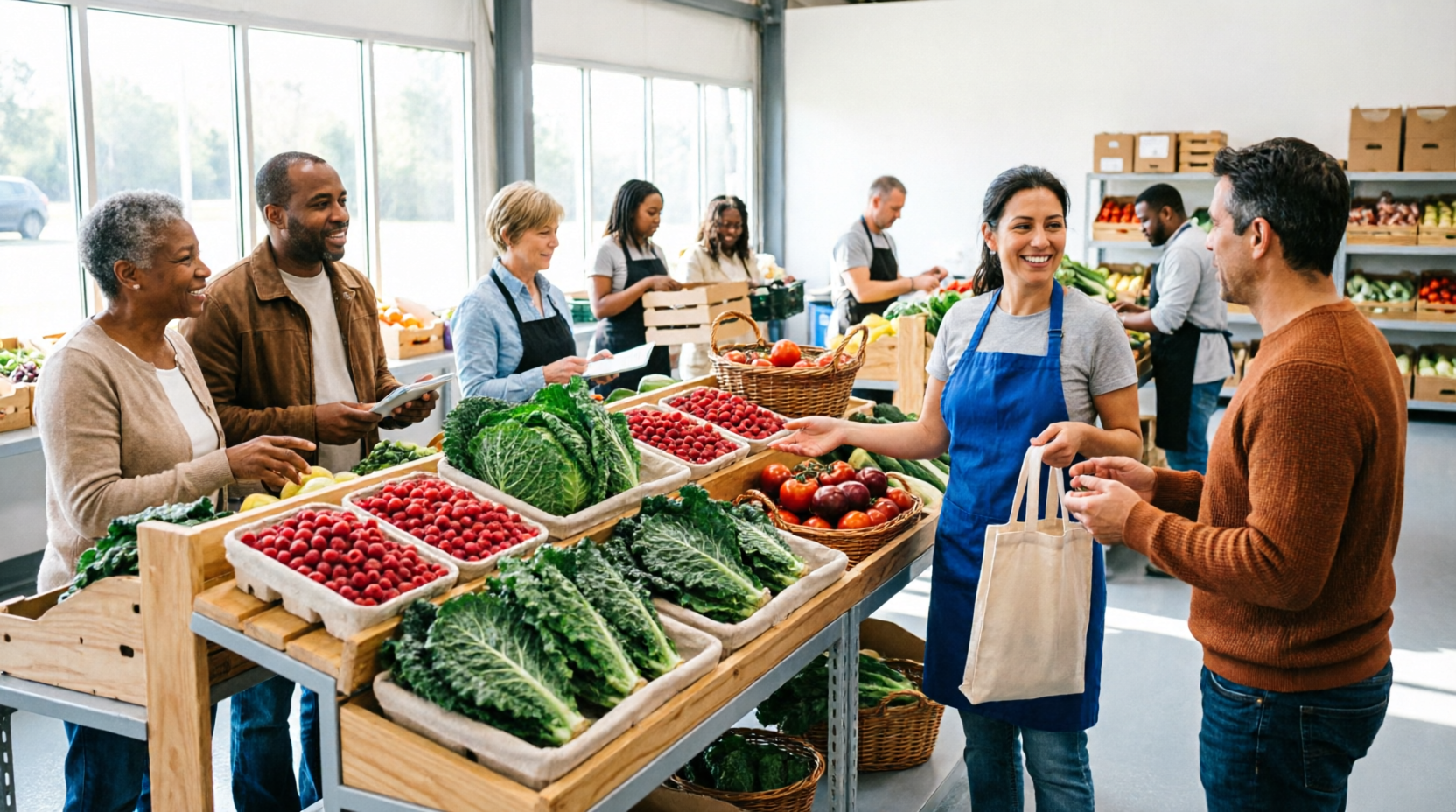
"We've created a choice model, and I think a lot of food banks are moving in that direction, and that allows folks to come in and see what's on offer that day and pick what works for their family," Treska explains.
Choice matters for practical reasons: cultural relevance (some families don't know how to prepare chickpeas or goat's milk), dietary restrictions, cooking facilities, and personal preferences ("If your kids aren't going to eat tuna, then take peanut butter"). This approach recognizes that food banking clients are diverse — new Canadians unfamiliar with local produce, families with specific dietary needs, individuals with varying kitchen setups. The choice model preserves dignity by treating clients as capable decision-makers rather than passive recipients.
Food Literacy: Understanding Best-Before Dates
One of the most significant barriers to reducing food waste is misunderstanding what best-before dates actually mean. Treska emphasizes that best-before dates are suggestions, not safety deadlines.
"Food Banks Canada and Second Harvest, both governing bodies of the food rescue programmes all across the country, have come out with charts and guidelines for handling rescued food so that it's very clear."
Canned goods: As long as the can isn't bulging, rusted, or unlabeled, canned items can last two years beyond their date safely.
Yogurt and fermented foods: "Yogurt is fermented. That stuff lasts for a very long time beyond the expiry date. The grocery stores want you to throw out that yogurt. Buy more yogurt."
Cheese: Like yogurt, cheese is fermented and often remains safe well past its labeled date.
The real test: "It's not really about the best before dates. You know, like when you smell the milk, does it smell sour? Don't use it."
Treska identifies food literacy as a critical area needing investment — particularly through schools, where children can absorb the knowledge and bring it home: "Going into schools and teaching kids that best before dates are not — like your milk is not going to expire on March 12th just because it says that — that is something that we teach young and then they can go home and teach their parents."
The Viewfield Model: Collaboration Through Co-Location
The Mustard Seed's Food Security Distribution Centre on Viewfield Road is a collaborative food hub where multiple organizations work under one roof. The intentional design creates what Treska calls "water cooler moments" — informal exchanges that spark innovation and problem-solving across organizational boundaries.
The hub currently brings together:
The Mustard Seed's Food Rescue Programme: Rescued 3.1 million pounds of food last year, distributing to 65+ agencies across Victoria.
South Island Farm Hub: An à la carte farm-to-table organization connecting consumers directly with local farmers, born during COVID when restaurants closed and farmers needed new distribution channels.
Flourish School Food Society: Creates accessible school food programmes for children in Victoria, with chefs who collaborate with The Mustard Seed's chef on food rescue innovations.
When organizations share space, innovation happens organically. When The Mustard Seed receives excess bananas through food rescue, volunteers process and freeze them. These go to a local bakery partnered with Flourish, which makes banana bread and sells it back to the school food programme at a reduced rate — a circular economy that reduces waste while supporting multiple organizations simultaneously.
Creating this collaborative space wasn't straightforward. Treska is candid about the early resistance: "Those conversations began early, weren't easy. They were contentious. There was strife. There was tension. There was elbows up. 'This is mine. I don't want anybody to have what we have.' That real scarcity mindset." The transformation required years of relationship-building and a fundamental shift toward abundance thinking.
De-stigmatizing Hunger: Creating Welcoming Spaces
Beyond logistics, The Mustard Seed is reimagining what it means to access food assistance. The downtown location runs a hospitality ministry offering hot lunch five days a week, dinners on weekends, breakfast once a month, and community space for coffee, conversation, music, bingo, and art.
De-stigmatization means recognizing diverse needs and comfort levels. Some people want to connect and share their stories; others prefer to quietly go about their business. Some are unhoused; others are working families who've never used food assistance before. "We just try to meet people with exactly where they're at," Treska explains.
Recognizing that not everyone feels comfortable at the downtown location, The Mustard Seed distributes food through 65+ partner agencies — university food banks, free markets at churches, school pickup programmes, community centres, neighbourhood houses. Multiple access points allow people to choose what feels right for them.
When people feel respected, they share their experiences. "I find that more and more people will start to tell me incredibly heartwarming stories of 'my family used a food bank and it was a game changer. We had a really tough season.'" Breaking down stigma has its own ripple effects.
The Bigger Picture
These four elements — choice, literacy, collaboration, and de-stigmatization — work together to form a dignity-centered model that reduces waste, preserves agency, builds community, and scales impact through partnership networks.
Treska is clear about the endgame: "In a perfect world, my job wouldn't exist." But until that day comes, the work continues through practical solutions that meet immediate needs while building toward systemic change.
On what's needed next: "I think that education and food literacy piece is really, really important. I think that from a leadership perspective, I'm trying to connect with as many leaders as possible in this sector, both nationally and provincially, because I wanna learn what's working and what isn't."
And on collaboration over competition: "I don't think any of us have any time to waste, and I don't think we should be making the same mistakes. We should just all be learning from each other."
Resources mentioned in this episode
- The Mustard Seed Street Church (Victoria, BC) — mustardseed.ca
- Flourish School Food Society — open-source blueprint for school food programmes
- South Island Farm Hub — farm-to-table direct sales
- Food Banks Canada — guidelines on food safety and best-before dates
- Second Harvest — food rescue best practices
Related Episode
Themes
- Food security
- Community resilience
- Food literacy
- Collaborative leadership
- Dignity and equity
- Food rescue and waste reduction