The Kitchen Is the Market, Culture Is the Infrastructure
How diaspora and everyday cooking shape real demand
Published March 24, 2026
The food system is usually described from the field outward. Production, inputs, yields, distribution. Even when we talk about markets, we tend to point to prices, trade flows, and retail. Demand is treated as something that exists — something to be measured, forecasted, or influenced at the margins.
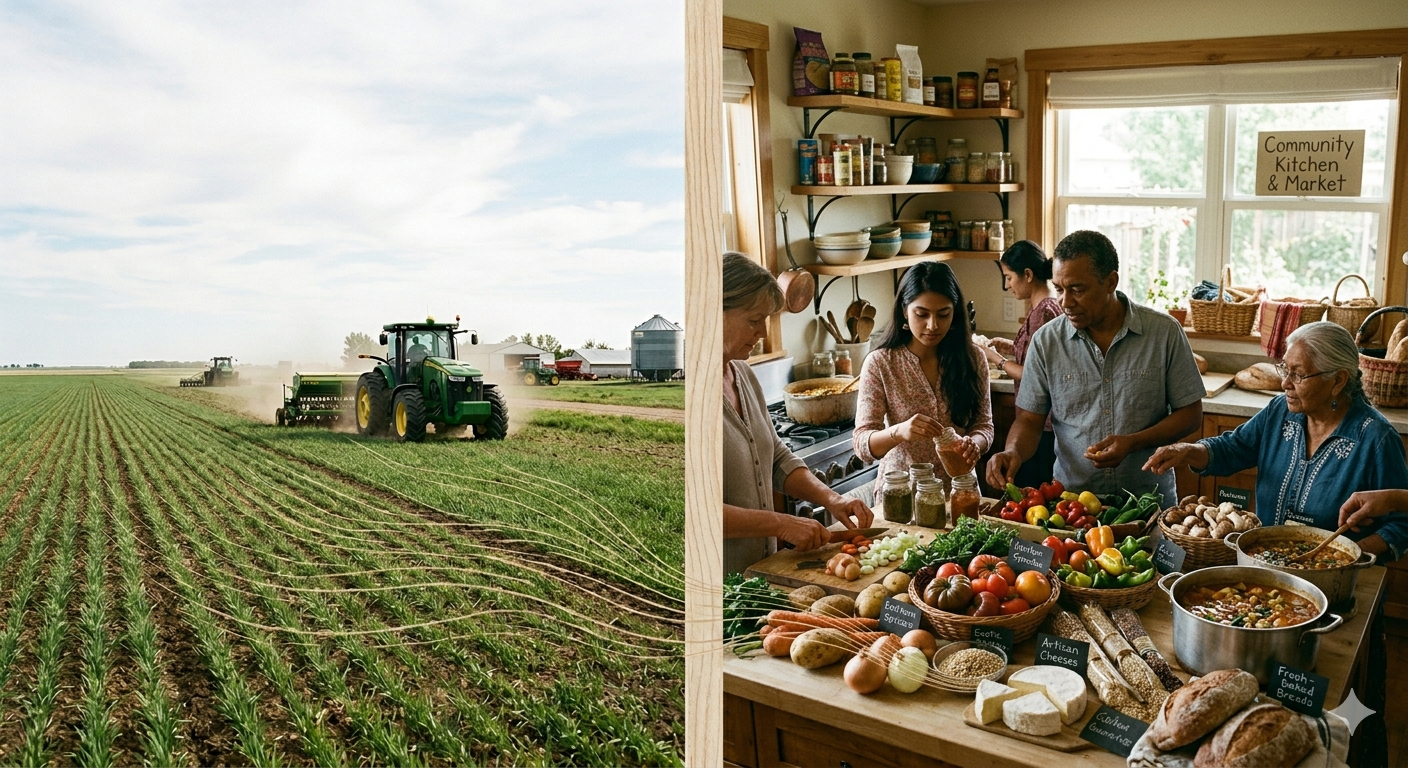
But demand is not abstract. It is made, daily, in kitchens.
A meal is a series of decisions. What to cook, what to substitute, what feels familiar enough to attempt. These decisions are shaped less by availability than by confidence, memory, and habit. People do not cook what they don't understand. They do not buy what they don't recognize. And they rarely adopt ingredients that don't feel like they belong in their lives.
This is where a large part of the food system either functions or fails.
From this perspective, the kitchen is not downstream of the market. It is the market. It is where demand is realized, reinforced, or rejected through repetition. What gets cooked regularly becomes normal. What becomes normal creates stable demand. And what has stable demand becomes viable for producers.
The gap between what is grown and what is used is not a logistical problem. It is a cultural one.
This is where culture operates as infrastructure.
Infrastructure is usually understood as physical — roads, storage, supply chains. But culture performs a similar function. It enables movement. It creates pathways. It determines whether something can travel from production into everyday life. Without cultural integration, food remains external. It may be available, even abundant, but it does not move.
When culture is present, the opposite happens. Ingredients become legible. Techniques are shared. Meals are repeated. Over time, this creates continuity between supply and use.
Much of this work is informal, and often invisible to the sector. It happens through families, communities, and increasingly through educators and creators who translate between contexts. They take ingredients that exist within a region and show how they can be used in ways that feel accessible and meaningful.
This is not marketing. It is system-building.
Diaspora communities play a particularly important role in this process. Movement of people carries cuisines with it — along with expectations about flavor, ingredients, and preparation. These expectations do not remain static. They adapt to what is locally available, creating new combinations that link global traditions with regional supply.
In doing so, diaspora expands the system.
It creates new forms of demand, not by replacing what exists, but by layering onto it. Ingredients that may have had limited use find new relevance. Producers encounter different markets. Entire categories of food shift from niche to normal as they are integrated into everyday cooking.
This process is not centrally coordinated. It emerges through repetition. Meals cooked in households become shared practices. Shared practices become cultural norms. Cultural norms shape purchasing patterns. And those patterns, over time, influence what is grown, processed, and distributed.
If we take this seriously, it changes how we think about the food system.
It suggests that production alone is insufficient. That increasing supply does not guarantee adoption. That "local food" initiatives will struggle if they do not connect to how people actually cook and eat. And that resilience depends not just on capacity, but on participation.
Food systems work when people know how to use them.
This has implications for leadership. The sector tends to focus on producers, processors, policymakers, and retailers. But there is another layer of actors shaping outcomes — those who influence how food is understood and practiced in everyday life.
Chefs, educators, writers, and creators are often positioned as downstream or peripheral. In reality, they operate at a critical junction. They shape familiarity, confidence, and meaning. They make ingredients usable. And in doing so, they help determine whether supply becomes demand.
The relationship between agriculture and culture is not linear. It is reciprocal.
What is grown influences what is possible. But what is culturally integrated determines what persists. The system evolves through this interaction, not through production alone.
Seen this way, the question is not simply what we should grow. It is whether people know how to live with what is grown around them.
That question does not get answered in policy documents or market reports. It gets answered in kitchens, one meal at a time.
Related Episode
Themes
- Culture and demand
- Diaspora and food systems
- Food literacy
- Leadership
- Local food adoption