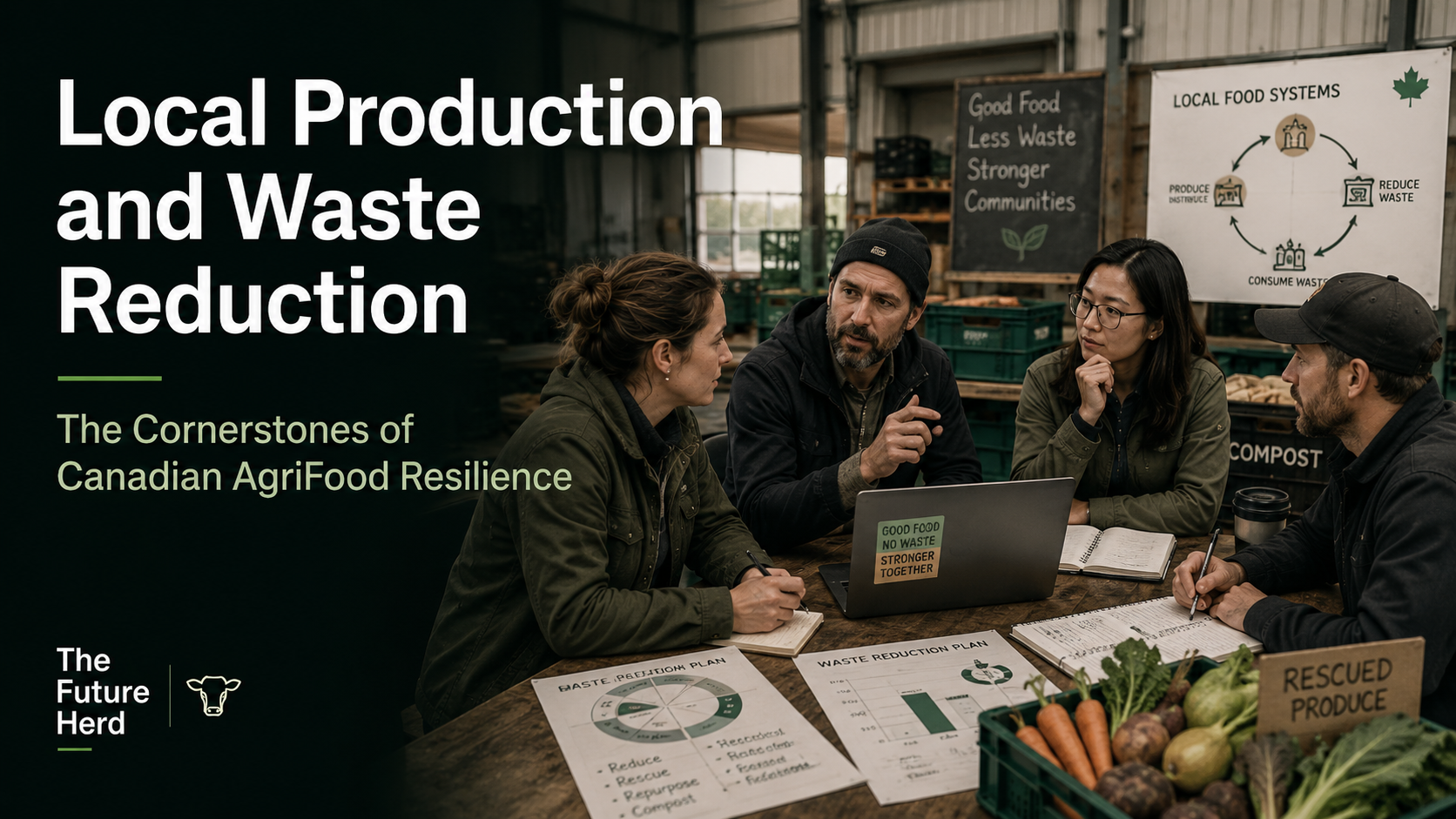
Local Production and Waste Reduction: The Cornerstones of Canadian AgriFood Resilience
How strategic infrastructure and measurement can transform Canada's food system from fragile to robust
Published May 12, 2026
Canada's agri-food sector stands at a critical juncture, where traditional approaches to food production and distribution are being challenged by increasing complexity and unpredictability. The path to true resilience, as illuminated by experts in the field, lies not in grand technological solutions, but in fundamental shifts toward localization, precise measurement, and strategic infrastructure development.
At the core of this transformation is the recognition that Canada's current food system is overly dependent on external sources and inefficient in its resource management. Camden Lawrence from First Nations Agriculture and Finance Ontario articulates this challenge succinctly: the need to increase domestic production and create robust provincial and national processing infrastructure that keeps more food within local ecosystems.
The concept of localization extends beyond mere geographical proximity. It represents a holistic approach to food systems that prioritizes community-level sustainability, job creation, and waste reduction. First Nations communities, for instance, are pioneering models where small-scale commercial agricultural operations not only generate income but also create closed-loop systems that minimize waste and maximize community benefit.
Measurement emerges as a critical, yet often overlooked, component of food system resilience. Lori Nikkel of Second Harvest emphasizes the fundamental principle: "You manage what you measure." Currently, Canada lacks harmonized data collection methods across its food system, creating significant blind spots in understanding waste, supply chains, and potential inefficiencies.
The "messy middle" of Canada's food infrastructure—encompassing transportation, cold storage, and data collection—represents both a significant challenge and an opportunity. Targeted investments in these areas can dramatically improve the system's ability to respond to disruptions and reduce waste. The federal government's Local Food Infrastructure Fund represents a promising start, providing crucial support for organizations developing innovative food distribution networks.
However, resilience cannot be achieved through infrastructure alone. It requires a systemic approach that addresses multiple interconnected challenges. Tyler McCann from the Canadian AgriFood Policy Institute suggests focusing on identifying critical input vulnerabilities, understanding infrastructure choke points, and ensuring economic accessibility of food.
The economic dimension cannot be overlooked. Camden Lawrence highlights the unique challenges of agricultural financing, where producers are often at the mercy of market fluctuations. Access to appropriate capital that understands the nuanced risks of agricultural production is crucial for supporting local, resilient food systems.
Waste reduction emerges as a central theme in building a more robust food system. With nearly 50% of food produced in Canada being wasted, there's enormous potential for improvement. This isn't just an environmental imperative but an economic and social one, potentially addressing food insecurity while creating more efficient supply chains.
As Canada confronts increasing uncertainties—from climate change to global trade disruptions—the path to a resilient agri-food sector becomes clear. It requires a coordinated, multi-stakeholder approach that prioritizes local production, precise measurement, strategic infrastructure, and waste reduction.
The future of Canadian food systems lies not in grand, centralized solutions, but in empowering local communities, investing in targeted infrastructure, and creating flexible, responsive networks that can adapt to changing conditions. By viewing resilience as an ongoing process of learning, measurement, and adaptation, Canada can transform its food system from vulnerable to vibrant.
Related Episode
Themes
- Food System Resilience
- Local Food Production
- Waste Reduction
- Infrastructure Development
- Data Measurement