Prince Edward Island's Agricultural Sector Punches Well Above Its Weight in the National Economy
When 170,000 people produce 25% of Canada's potatoes and carry an agricultural emissions profile more than double the national average, the island's food system becomes a case study in concentrated consequence.
Published May 26, 2026
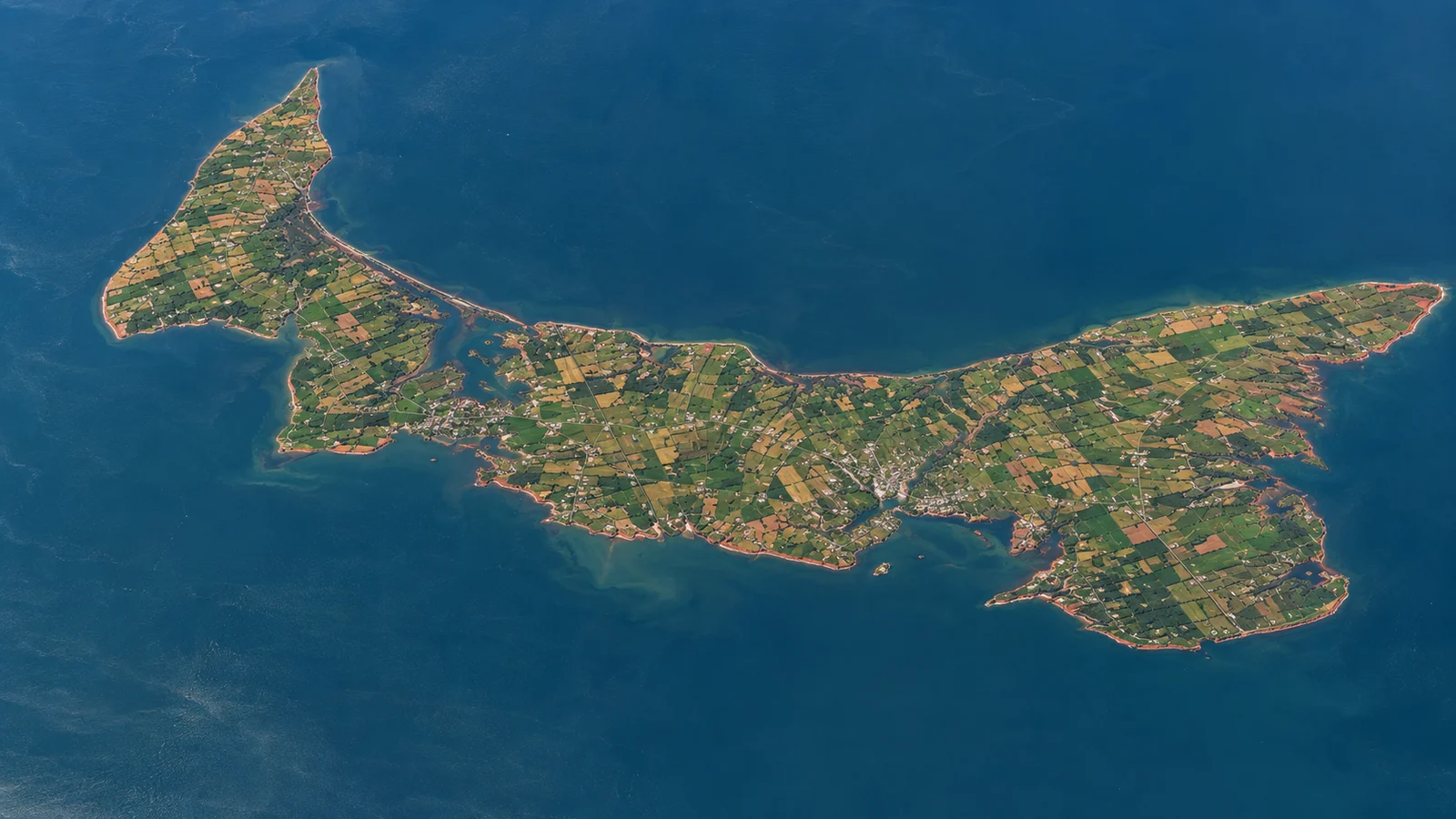
Prince Edward Island occupies roughly 0.1 percent of Canada's landmass and is home to less than half a percent of its population. Those numbers suggest a province that registers as a footnote in national economic conversations. The agricultural reality is almost exactly the opposite. As Donald Killorn, Executive Director of the PEI Federation of Agriculture, described in a recent conversation on The Future Herd, agriculture on the island accounts for roughly the same share of the provincial economy as it does in Manitoba or Saskatchewan — provinces whose agricultural identities are foundational to how English Canada understands itself. That comparison is not rhetorical flourish. It is a structural fact that shapes everything from how island farmers negotiate federal policy to how the sector manages risk when things go wrong.
The potato industry is the clearest expression of this disproportionality. One quarter of all potatoes grown in Canada come from a single island province with 170,000 residents. Sixty percent of that crop moves into processing — french fries, chips, hash browns — while thirty percent enters fresh markets and ten percent is reserved for seed. That seed category is where the island's claim to global distinction is sharpest: PEI seed potatoes are widely regarded as among the best in the world, a product of the province's iron-rich red soil and its accumulated decades of agronomic expertise. The concentration of that expertise in one small geography is precisely what makes the sector so economically powerful, and precisely what makes it so exposed. When the Canadian Food Inspection Agency, responding to American pressure over the presence of potato wart in a small number of known fields, effectively drew a quarantine box around the entire province in late 2021, the result was the near-total shutdown of a billion-dollar export industry. Killorn, who had started his role as Federation director five days before the ban came into effect, found himself thrust into a crisis that illustrated with brutal clarity how a single regulatory decision, applied bluntly to a geographically concentrated sector, can detonate an economy. The fact that extensive subsequent sampling returned no additional positives for potato wart made the heavy-handedness of the federal response only more apparent in retrospect.
What is analytically interesting about PEI agriculture, though, is not simply that it is large relative to the province's size. It is that the sector's disproportionate scale creates a set of sustainability pressures that have no real national parallel. Killorn noted that agriculture accounts for approximately twenty-five percent of the island's total emissions profile. Nationally, agriculture sits at around ten percent. That fifteen-point gap is not incidental — it reflects what happens when a small landmass is given over so extensively to food production, and when that production is intensive enough to compete on a continental scale. For a sustainability professional coming to agriculture from outside the sector, as Killorn did by way of ecological research and natural resource management, that emissions concentration is not just an environmental problem. It is a governance pressure point. The island's farmers are, in emissions terms, carrying a burden that is structurally different from what their counterparts in larger provinces face, and the policy frameworks designed at the national level often fail to account for that difference. Killorn's approach — building resilience frameworks that span governance capital, ecological capital, economic capital, and social capital — is partly an attempt to articulate that difference in language legible to federal funders and national agricultural bodies.
The dairy sector offers a counterpoint that is worth dwelling on, because it suggests what structural resilience can look like when it is deliberately constructed rather than inherited. In the 1980s, PEI's fragmented community dairies were consolidated into Amalgamated Dairies Limited, a cooperative owned by the dairy farmers themselves. ADL now purchases roughly ninety-nine percent of the milk produced on the island. Its branded products — cheese, ice cream, fluid milk — are distributed across Atlantic Canada, and the cooperative model means that the value generated by processing stays within the farming community rather than being extracted by outside capital. Killorn describes this system as genuinely holistic, and the word is apt. The cooperative structure aligns the incentives of producers and processors in a way that purely commercial dairy operations rarely achieve. It also creates a form of economic resilience that the potato sector, with its dependence on export markets and its exposure to phytosanitary politics, currently lacks. The contrast between the two industries is a useful lens for thinking about what kinds of agricultural structures are likely to be durable as climate variability, trade pressures, and regulatory complexity all intensify simultaneously.
The island's agricultural breadth extends further than the two flagship sectors. PEI has one of Canada's twenty federally inspected beef processing facilities — a surprisingly significant piece of food infrastructure for a province of its size. Honey crisp apple production is scaling up, and the first commercial apple shipments to Florida markets represent an early signal of horticultural diversification. Mussel and oyster aquaculture, though technically distinct from the land-based agricultural sector, is woven into the same provincial food identity. The cumulative picture is of an island whose food system is not just large relative to its population, but genuinely diverse in ways that are still being mapped and developed. Killorn's ecological training — his years working in the Costa Rican rainforest, on Caribbean barrier reefs, and along the Bay of Fundy on underwater acoustics and whale conservation — has given him an unusual vantage point on that system. He thinks in terms of interdependencies and tipping points, in terms of what happens when a complex adaptive system is pushed past its tolerance thresholds. Applied to PEI agriculture, that framing produces a leadership posture oriented less toward defending the status quo than toward positioning the sector for the turbulence that ecological and geopolitical pressures are already beginning to generate.
What PEI's agricultural story ultimately illustrates is that disproportionate contribution to a national economy is not the same thing as disproportionate influence over the policies that govern it. The potato ban exposed how a sector can be indispensable in productivity terms while remaining vulnerable to blunt federal interventions shaped by continental trade politics. The dairy cooperative model shows that structural choices made at the industry level can create forms of resilience that policy cannot easily either provide or take away. The emissions concentration problem shows that national frameworks calibrated to average conditions can produce poor outcomes for provinces where agriculture is not average. Navigating all of this requires exactly the kind of systems-level thinking that Killorn argues is the core competency his background provides — not agronomic depth, but the capacity to read the whole system and to be standing in the right place when the money and the policy attention finally arrive.
Related Episode
Themes
- Agricultural Disproportionality and Small-Province Economic Identity
- Emissions Concentration as a Governance Pressure Point
- Cooperative Ownership as a Structural Advantage
- Phytosanitary Politics and the Vulnerability of Export Dependency
- Ecological Systems Thinking Applied to Agri-Food Leadership