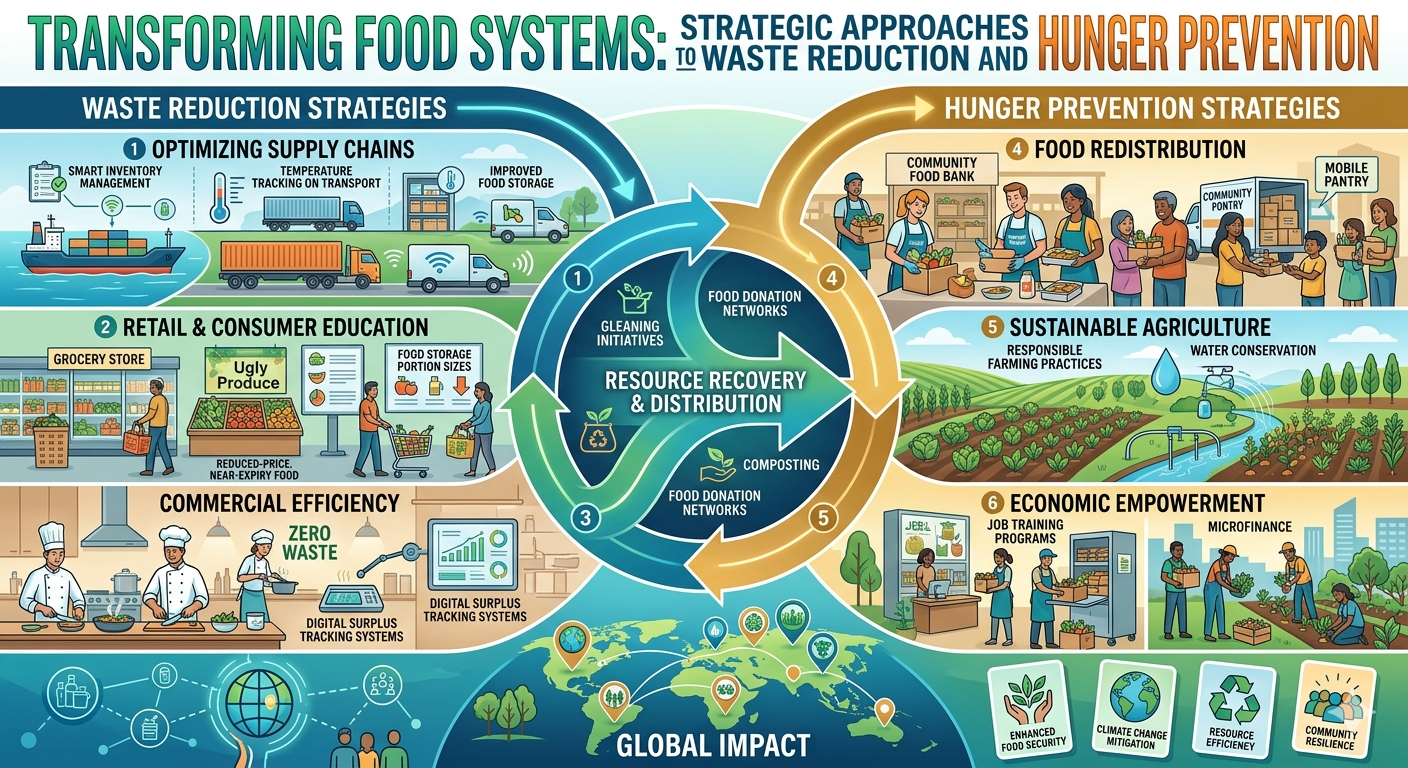
Transforming Food Systems: Strategic Approaches to Waste Reduction and Hunger Prevention
Beyond charity: Reimagining food infrastructure as a comprehensive societal strategy
Published April 21, 2026
The challenge of food waste and hunger is not merely a logistical problem, but a profound systemic issue that demands a holistic, strategic approach. As Lori Nikkel from Second Harvest articulates, addressing food insecurity requires understanding the complex infrastructure that connects production, distribution, and consumption — and fundamentally reimagining how we value food in our society.
Current food systems reveal stark inefficiencies: in 2019, 58% of food produced for Canadians was lost or wasted, a number that has since marginally improved to 46.5%. This statistic represents not just economic loss, but a moral failure to efficiently use resources while simultaneously addressing hunger. The solution requires more than incremental changes; it demands a comprehensive national strategy that harmonizes efforts across government, industry, and community organizations.
Key to this transformation is standardization and measurement. Without consistent metrics and goals, food waste reduction remains an abstract aspiration. The development of new standards by organizations like the Canadian Standards Association represents a critical step. By creating frameworks that integrate seamlessly with existing food safety protocols, these standards can incentivize meaningful change across sectors.
One particularly promising area of intervention is addressing misunderstandings around best-before dates. These labels currently account for 23% of avoidable food loss — approximately $13 billion annually. By educating consumers and reforming labeling practices, significant volumes of edible food could be preserved and redirected.
However, waste reduction cannot be conflated with solving food insecurity. As Nikkel emphasizes, providing food is an outcome, not a sustainable solution to systemic poverty. True food security requires parallel efforts in wage policy, social support, and creating dignified access points for those experiencing economic vulnerability.
The most promising approaches recognize food access as a fundamental human right, not a charitable intervention. This means developing infrastructure that meets people where they are — whether through child nutrition programs, addiction treatment centers, or community spaces that integrate food support without stigmatization.
Ultimately, transforming food systems requires a cultural shift. It demands recognizing that anyone can experience food insecurity and that compassionate, empathetic approaches — not sympathetic ones that position helpers as superior — are essential. The goal is not just reducing waste or feeding people, but creating a more resilient, equitable food ecosystem that honors human dignity.
The path forward involves collaborative frameworks, standardized measurement, consumer education, and a commitment to systemic change. By treating food waste and hunger as interconnected challenges requiring strategic, holistic solutions, we can begin to reimagine a food system that works for everyone.
Related Episode
Themes
- Food Waste Reduction
- Food Security Policy
- Systemic Transformation
- Dignity-Centered Food Access
- National Food Strategies